
A practical guide for people leaders navigating the next era of work.
Artificial Intelligence is no longer something HR teams are preparing for.
It is already here.
From CV screening and skills matching to workforce planning and employee sentiment analysis, AI is quietly transforming how HR operates. But while technology is accelerating, one truth remains unchanged:
HR is still about people.
The difference in 2026 is that HR professionals are now expected to blend emotional intelligence with digital fluency and strategic thinking with automation.
So what does this really mean for HR teams, hiring managers, and organisations trying to stay competitive?
Let’s unpack it.
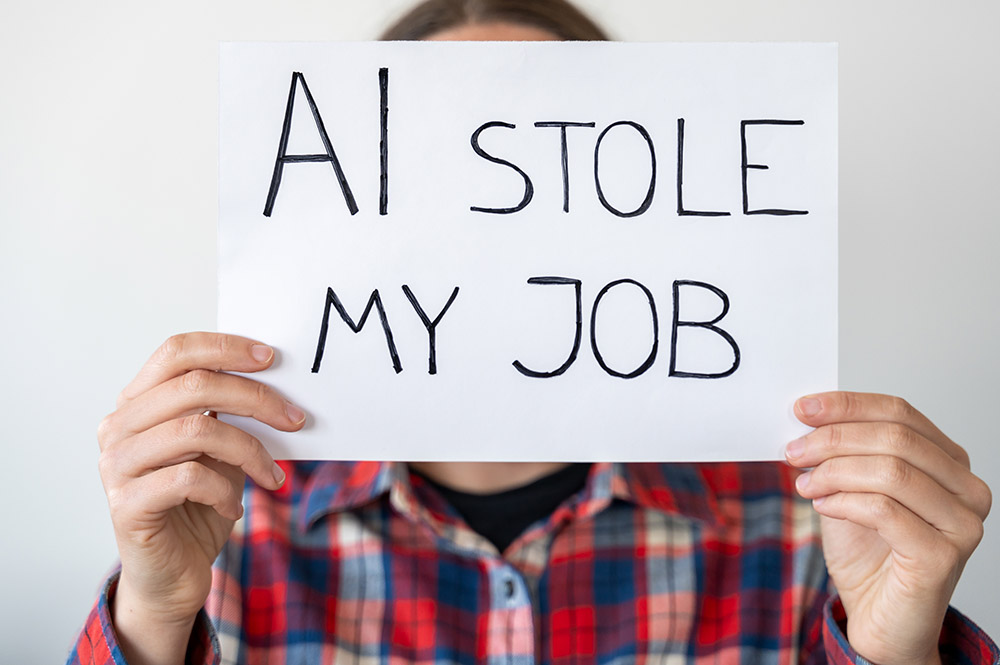
AI Is Taking Over Tasks, Not HR Jobs.
One of the biggest misconceptions about AI in HR is that it will replace HR professionals.
In reality, AI is replacing administration, not judgement.
Routine activities like:
- CV filtering
- Interview scheduling
- Basic candidate screening
- Payroll queries
- Policy lookups
are increasingly automated.
That frees HR professionals to focus on what matters most:
- Culture building
- Employee experience
- Leadership development
- Change management
- Strategic workforce planning
In short, AI is pushing HR up the value chain.
The most successful HR teams are using AI to reduce friction, not replace human connection.
Recruitment Is Becoming Faster, Smarter and More Data-Led.
Talent acquisition is one of the fastest-moving areas of AI adoption.
Modern systems can now:
- Match candidates to roles based on skills, not just job titles
- Predict hiring success using behavioural data
- Identify passive candidates more accurately
- Reduce time-to-hire through automated workflows
But here’s the catch.
Technology alone does not create great hiring outcomes.
Human oversight is still essential to ensure fairness, remove bias, assess cultural fit, and build genuine relationships with candidates.
AI provides speed and insight. HR provides context and empathy.
The strongest recruitment strategies combine both.
Skills Are Replacing Job Titles.
AI is accelerating a major shift in how organisations think about talent.
Traditional job descriptions are giving way to skills-based hiring.
Instead of recruiting for rigid roles, forward-thinking HR teams are focusing on:
- Transferable skills
- Learning agility
- Adaptability
- Emotional intelligence
- Digital confidence
Why?
Because roles are changing faster than ever.
Hiring for potential rather than experience is becoming a competitive advantage, particularly in HR where transformation, technology and people strategy now intersect.
HR Professionals Are Becoming Change Leaders.
As AI reshapes workflows across every department, HR is increasingly responsible for guiding organisations through uncertainty.
That includes:
- Supporting employees through automation
- Reskilling teams for future roles
- Managing fear and resistance to change
- Embedding ethical AI use
- Maintaining trust and transparency
This positions HR as a central driver of organisational resilience.
In 2026, HR is no longer just a support function. It is a strategic partner helping businesses adapt in real time.
Employee Experience Is Being Personalised at Scale.
AI is enabling more tailored employee journeys, from onboarding to development.
Examples include:
- Personalised learning pathways
- Predictive wellbeing support
- Real-time engagement feedback
- Career progression recommendations
For HR, this means more efficient ways of moving away from one-size-fits-all policies towards individualised experiences.
But it also raises important questions around data privacy, consent and ethics.
HR leaders must balance innovation with responsibility.
Trust remains the foundation of everything.
What This Means for HR Hiring in 2026.
As AI becomes embedded in people operations, the profile of HR professionals is changing.
Employers are increasingly seeking HR candidates who bring:
- Strong digital literacy
- Commercial awareness
- Change management capability
- Strategic mindset
- Deep emotional intelligence
The modern HR professional sits at the intersection of people, technology and business performance.
That is a very different brief from even five years ago.
The Human Element Still Wins.
Despite all the automation, algorithms and analytics, one thing has not changed:
People still want to feel heard, valued and supported.
AI can process data.
HR processes meaning.
The organisations that thrive in 2025 will be those that use AI to enhance humanity, not replace it.
In Summary:
AI is transforming HR by:
- Automating low-value tasks
- Enabling smarter recruitment
- Driving skills-based hiring
- Elevating HR into a change leadership role
- Personalising employee experience
But success depends on how thoughtfully it is implemented.
Technology creates opportunity. HR creates impact.
Final Thought.
AI is not redefining HR.
It is revealing what great HR has always been about.
Connection. Strategy. Empathy. Growth. If you would like support hiring HR professionals who can lead through digital change or help future-proof your people function, we’re always happy to talk.