

More than 60 percent of British companies now see talent acquisition as crucial for long-term growth. That shift affects every HR manager looking to build stronger teams and protect organisational culture. As workforce change accelerates, understanding modern talent acquisition strategies can mean the difference between ongoing success and costly turnover. This guide dives into smarter approaches that help British HR leaders find candidates who truly fit and thrive.
Table of Contents
- Defining Talent Acquisition In Hr Today
- Key Steps In The Talent Acquisition Process
- Types Of Talent Acquisition Strategies
- Cultural Fit And Long-Term Success
- Common Challenges And How To Avoid Them
Key Takeaways
| Point | Details |
|---|---|
| Strategic Focus | Talent Acquisition emphasises long-term workforce planning and building adaptable talent pipelines rather than just filling immediate vacancies. |
| Cultural Fit | Assessing cultural alignment is crucial for employee retention and fosters an environment where individuals can thrive and contribute meaningfully. |
| Diversity and Inclusion | Embracing diverse perspectives is essential to drive innovation and resilience within organisations, requiring deliberate design of recruitment processes. |
| Technology Utilisation | Leveraging advanced analytics and AI can enhance recruitment effectiveness while maintaining a human connection in the hiring process. |
Defining Talent Acquisition in HR Today
Talent Acquisition represents a strategic, forward-looking approach to recruiting that goes far beyond traditional hiring practices. Unlike simple recruitment, talent acquisition focuses on building comprehensive, long-term human resource strategies that align organisational needs with exceptional professional talent.
At its core, talent acquisition is about systematically identifying workforce requirements that support broader business objectives. HR professionals understand this isn’t just about filling immediate vacancies, but developing robust talent pipelines that can adapt and grow with organisational strategy. This approach involves sophisticated processes including:
- Proactive candidate sourcing
- Strategic workforce planning
- Comprehensive candidate assessment
- Cultural alignment evaluation
- Long-term talent development strategies
Modern talent acquisition recognises that attracting top professionals requires a holistic perspective. Companies must present compelling employer value propositions that extend well beyond competitive salaries. This means creating workplace environments that offer meaningful professional growth, inclusive cultures, and opportunities for significant contributions.
The following table contrasts traditional recruitment with modern talent acquisition to highlight their strategic differences:
| Aspect | Traditional Recruitment | Modern Talent Acquisition |
|---|---|---|
| Focus | Filling immediate vacancies | Long-term workforce strategy |
| Approach | Reactive hiring | Proactive talent pipeline |
| Candidate Engagement | Transactional, short-term | Partnership, ongoing relationship |
| Evaluation Criteria | Skills and credentials | Cultural fit, potential, values |
| Outcome | Quick placement | Sustainable organisational growth |
Pro Tip: Develop a talent acquisition strategy that treats potential candidates as long-term partners rather than transactional recruitment targets.
Key Steps in the Talent Acquisition Process
Talent acquisition is a complex, strategic process that requires meticulous planning and execution. Comprehensive talent acquisition involves five critical stages designed to ensure organisations attract and retain top-tier professionals who align with their long-term objectives.
The first stage focuses on workforce planning, where HR teams conduct detailed analyses to identify current skill gaps and anticipate future talent requirements. This strategic approach enables businesses to develop proactive recruitment strategies rather than reactive hiring processes. Key activities during this phase include:
- Analysing current workforce demographics
- Projecting future organisational skills needs
- Mapping potential internal talent progression pathways
- Identifying potential external talent pools
- Aligning recruitment strategies with business growth objectives
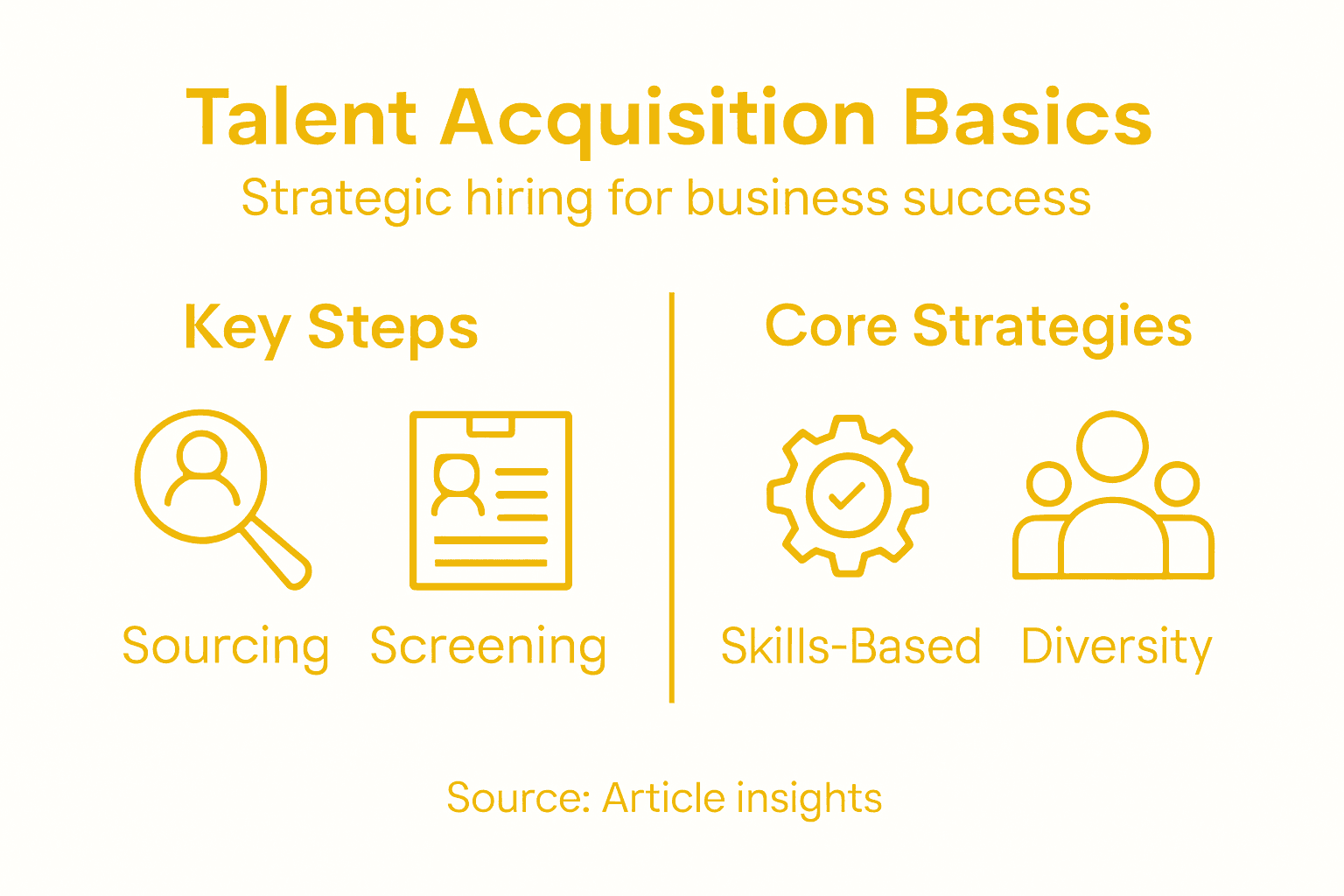
Subsequent stages involve targeted candidate sourcing and sophisticated screening methodologies. HR professionals utilise multiple channels including professional networks, specialised job boards, and targeted recruitment campaigns to build robust talent pipelines. The screening process becomes increasingly nuanced, moving beyond traditional CV assessments to evaluate candidates’ potential cultural fit, adaptability, and long-term value proposition.

The final stages of talent acquisition centre on comprehensive interviewing, rigorous candidate assessment, and seamless onboarding. This holistic approach ensures not just successful recruitment, but also effective integration of new professionals into the organisational ecosystem.
Pro Tip: Develop a dynamic talent acquisition framework that views recruitment as a continuous strategic conversation, not a transactional event.
Types of Talent Acquisition Strategies
Talent acquisition strategies have evolved significantly, moving beyond traditional recruitment approaches to become sophisticated, data-driven methodologies. Modern talent acquisition encompasses multiple strategic approaches designed to attract, engage, and retain exceptional professional talent across diverse organisational contexts.
Key strategic approaches include employer branding, which transforms an organisation’s reputation into a powerful talent magnet. This involves crafting compelling narratives about company culture, values, and professional development opportunities. Companies invest in showcasing their unique workplace environment, highlighting:
- Meaningful career progression pathways
- Commitment to employee wellbeing
- Innovative workplace practices
- Opportunities for continuous learning
- Transparent and supportive management structures
Another critical strategy focuses on skills-based hiring, which shifts emphasis from traditional credentials to genuine competencies and potential. This approach recognises that academic qualifications do not always correlate with job performance. HR professionals now design recruitment processes that evaluate candidates’ practical skills, problem-solving abilities, and adaptability through sophisticated assessment techniques.
Additionally, organisations are increasingly prioritising diversity and inclusion as a core talent acquisition strategy. This involves deliberately designing recruitment processes that eliminate unconscious biases, broaden talent pools, and create opportunities for professionals from varied backgrounds. By embracing diverse perspectives, companies can drive innovation, enhance creativity, and build more resilient organisational cultures.
Pro Tip: Design talent acquisition strategies that view candidates as potential long-term partners, not just immediate role fillers.
Cultural Fit and Long-Term Success
Cultural fit represents a critical dimension of modern talent acquisition, transcending traditional recruitment metrics. Assessing cultural alignment impacts employee retention and organisational success dramatically, creating workplaces where professionals can genuinely thrive and contribute meaningfully.
At its core, cultural fit examines how an individual’s core values, working style, and behavioural patterns harmonise with an organisation’s unique ecosystem. This goes far beyond superficial personality matching. Successful cultural alignment involves deep understanding of:
- Shared organisational values
- Collaborative work approaches
- Communication preferences
- Psychological safety expectations
- Professional development motivations
Organisations are increasingly developing sophisticated assessment methodologies to evaluate cultural compatibility. These strategies involve multi-layered evaluation techniques that extend beyond traditional interviews, including behavioural assessments, team interaction simulations, and values-based questionnaires. The objective is to create holistic candidate profiles that predict not just technical competence, but potential long-term engagement and team synergy.
Moreover, cultural fit assessment recognises that diversity and alignment are not mutually exclusive. Progressive organisations understand that bringing diverse perspectives into a cohesive cultural framework drives innovation and resilience. This nuanced approach helps build dynamic teams where individual uniqueness is celebrated while maintaining core organisational values and collective objectives.
Pro Tip: Design recruitment processes that assess cultural compatibility through multiple lenses, balancing objective evaluation with genuine human connection.
Common Challenges and How to Avoid Them
Talent acquisition professionals face numerous complex challenges in today’s dynamic recruitment landscape. Navigating talent acquisition challenges requires strategic approaches that balance technological innovation with human insight, creating robust solutions for sustainable hiring practices.
One of the most significant challenges organisations encounter is managing prolonged recruitment timelines. These extended processes can discourage high-quality candidates and create competitive disadvantages. Key strategies to address this include:
- Streamlining interview processes
- Implementing efficient screening technologies
- Developing clear candidate communication protocols
- Reducing unnecessary bureaucratic steps
- Utilising data-driven recruitment analytics
Another critical challenge involves overcoming inherent recruitment biases that limit diversity and talent pool potential. Progressive organisations are developing sophisticated approaches to mitigate unconscious prejudices, including anonymised application processes, structured interview frameworks, and advanced candidate evaluation techniques that focus on skills and potential rather than traditional demographic markers.
Technology plays an increasingly pivotal role in addressing talent acquisition challenges. By leveraging artificial intelligence and advanced analytics, HR professionals can create more nuanced, objective recruitment strategies that identify exceptional candidates while maintaining human connection and organisational culture alignment.
Here is a summary of common talent acquisition challenges and practical solutions:
| Challenge | Potential Risk | Strategic Solution |
|---|---|---|
| Prolonged timelines | Losing top candidates | Streamline interview stages |
| Recruitment biases | Reduced diversity | Standardised, skills-based assessment |
| Lack of technology | Inefficient processes | Adopt data-driven recruitment tools |
| Poor candidate integration | High turnover | Strengthen onboarding experience |
Pro Tip: Develop a flexible recruitment approach that balances technological efficiency with genuine human interaction and organisational values.
Unlock Lasting Success Through Strategic Talent Acquisition
The article highlights key challenges such as prolonged recruitment timelines, recruitment biases, and the critical importance of cultural fit in achieving sustainable organisational growth. If you are seeking to overcome these pain points and develop a proactive talent acquisition strategy that identifies not just skills but genuine potential and cultural alignment, expert support is essential. Tailoring recruitment specifically to HR professionals requires a partner who understands the nuances of workforce planning and long-term talent pipelines.
At The HR Recruiters, we specialise in connecting organisations across the UK with experienced HR professionals who fit both the immediate role and your company culture for lasting success. Our recruitment process includes rigorous candidate screening focused on cultural compatibility and future potential, ensuring each placement backs your strategic goals. Don’t let recruitment challenges slow your progress. Explore how our tailored recruitment services can transform your hiring approach today and secure top talent who will grow with your organisation.
Frequently Asked Questions
What is talent acquisition?
Talent acquisition is a strategic process of recruiting and hiring professionals that goes beyond simply filling vacancies. It focuses on aligning organisational needs with long-term workforce strategies to build a sustainable talent pipeline.
Why does talent acquisition matter for businesses?
Talent acquisition is crucial for businesses because it ensures they attract and retain top talent that supports their long-term objectives, enhances organisational culture, and drives overall success and innovation.
How does talent acquisition differ from traditional recruitment?
Talent acquisition differs from traditional recruitment by focusing on proactive workforce strategy and building long-term relationships with candidates, rather than simply filling immediate job openings with minimal engagement.
What are the key steps involved in the talent acquisition process?
The key steps in the talent acquisition process include workforce planning, candidate sourcing, screening, interviewing, and onboarding. Each stage focuses on aligning candidates’ skills and cultural fit with organisational goals.